"I'll never catch up!" This is a common saying in the scrapbooking community. We are all there and we all feel it. We have boxes and containers of photos and momentos. It's OK - you'll never be 'caught up'. And that is one of the beauties of our hobby: it's ongoing. So, how can you start to feel 'caught up'? Try the Project Life (by Becky Higgins) way of catching up to make a dent in your photos and feel accomplished. Here's how:
1. Decide on your photos
Look through your computer or actual printed photos and decide which ones you want to scrap into a Project Life Album. If they are digital, look for a deal from Walgreens, CVS, Shutterfly or your favorite photo printing manufacturer. Get them printed.
2. Decide on your pocket layout
Don't overthink this step and make it simple on yourself. I use the same style for my Project Life albums because I don't have the time to resize photos and I tend to hold the camera the same way so 99% of my photos are 6"x4". For me, I use Design A, which allows for 4 photos and 4 journaling cards. Boom - done!
3. Decide on your photo placement
Do you want to group them by day, by week or by year? Make it easy and stick to it.
4. Journal and Embellish
Let's face it - you aren't going to remember everything that happened from 4 or 5 years ago! It's ok - journal what you do remember about that photo - even if it is just who is in the photo or where you were. The great thing about pictures is they do prompt you to remember details about an event but don't beat yourself up if you don't remember.
And that's it. Buy your products, print your photos and make some time to get 'caught up'!

Showing posts with label photos. Show all posts
Showing posts with label photos. Show all posts
Thursday, March 10, 2016


Wednesday, February 17, 2016
Why Memory Preservation? Caring for your History Part III
In today's post, we are going to focus on preserving your photographs:

Understanding the Problem
Photographs employ a process in which a medium which has been coated with various chemicals that react to light is first exposed to a light source to "take" the picture and then is processed using other chemicals that fix and stabilize the image. The negative is then used to create prints on paper that has been coated with even more chemicals. Given the number of chemicals involved, it should not be surprising that no photograph is completely stable. Although in the short run it is insignificant, a small amount of sensitivity to light is always present. Photographs can also react rapidly and unpredictably in the presence of other chemicals.
All photographs fade over time. Traditionally processed black and white photographic prints may last a century or more. Color photographs, because of the various dyes used to create the color, are very susceptible to color change and fading. In particular color photos that are exhibited, may experience noticeable color change after only ten to fifteen years. Polaroid or other "instant" developing photographs are also likely to be chemically unstable and as a result fade very quickly.
Photographs
Photographs have long been used to capture family memories. Every photographic process, however, is subject to decay and self-destruction.
Understanding the Problem
Photographs employ a process in which a medium which has been coated with various chemicals that react to light is first exposed to a light source to "take" the picture and then is processed using other chemicals that fix and stabilize the image. The negative is then used to create prints on paper that has been coated with even more chemicals. Given the number of chemicals involved, it should not be surprising that no photograph is completely stable. Although in the short run it is insignificant, a small amount of sensitivity to light is always present. Photographs can also react rapidly and unpredictably in the presence of other chemicals.
All photographs fade over time. Traditionally processed black and white photographic prints may last a century or more. Color photographs, because of the various dyes used to create the color, are very susceptible to color change and fading. In particular color photos that are exhibited, may experience noticeable color change after only ten to fifteen years. Polaroid or other "instant" developing photographs are also likely to be chemically unstable and as a result fade very quickly.
The Enemies of Photographs
Photographs are vulnerable to the same enemies as is paper; heat, humidity, light, and mishandling. Because of their chemical nature, photographs also often react negatively to the presence of other chemicals. Even the oils from a person's hands, if left on a photographic print or negative, can eventually cause finger prints to become permanently embedded in the image. Because photographic images are found on light sensitive materials that cannot be made completely stable, bright light is particularly destructive to photographs.Preserving Photographs
Ideally, photographs should be stored in an extremely cool environment, with color filming lasting longest at a temperature of about forty degrees fahrenheit. Few people are willing to go through the expense and trouble of purchasing a refrigerator solely to store their film. More practical suggestions include:- Store photographs in the coolest place in a home that is not subject to high or rapid changes in humidity. Avoid the basement of most homes.
- Always handle photographic prints and particularly photographic negatives by the edges. An even better option, is to wear light gloves made of a lint free material while handling photographic images.
- Do not expose photographic prints or negatives to bright light for extended periods of time unless the negative from which the photograph was made can be found and is properly stored. If a negative is not available, a copy negative should be made prior to exhibiting the photographic print.
- Use high quality color negative film and paper to take and print color photographs. After conducting independent tests for long-term durability, Henry Wilhelm, in The Permanence and Care of Color Photographs (1992) recommends among the negative film marketed for the amateur market the use of Fujicolor Super G 200, Konica Color Super SR 200 3M ScotchColor 200 Film or Polaroid OneFilm Color Print Film (ISO 200) in the medium speed range (ISO 160-200). Wilhelm's more surprising finding was that there was great variability in the fading quality of the paper upon which photos were printed. Fujicolor Super FA Type 3 and Fujicolor SFA3 papers could be exposed for fifty years without color fade.
Photographs: a Checklist
- Store photographs in a cool place that is not subject to high humidity.
- Store photographs away from bright light. If you choose to display family photographs use UV filtering glass.
- Always handle photographs by their edges. Better yet, wear gloves when handling photographic items.
- Select film with longevity in mind.
- When employing a professional photographer ask that he or she print photos on long-lived paper.
- Treat color photographs as a temporary medium and assume you will have to have them copied.
Sunday, January 3, 2016
Why Memory Preservation? Caring for your Heritage Part I
I am really passionate about my heritage. My parents are in their 80s and the stories they have about growing up during the Depression and how they lived is both fascinating and important to me. Luckily, my Mom has gone through the old family photographs and labeled the names of the people in them, but she hasn't added the year or locations. I am trying to work with her on that.
I have started scrapbook albums for her and all of my siblings (there are 5 of us) in order to preserve the photos. She had the photos glued into a handmade album from the 40s or 50s - not acid or lignin-free paper so the photos were starting to deteriorate. I am slowly moving them onto safe paper and building her an album.
Memories are an important part of our lives. They tell the story of how we became who we are, and we can better understand that from looking at our past. Old letters, photographs, newspaper clippings, the family Bible and other mementos help us recall our past and the history of our family and community. All of these things are subject to decay and destruction if not properly cared for.
Over the next few posts, we will explore which items are important and how to preserve them. And remember, I am here to help you with this process. If you find that photos and the stories are important but don't have the time to create the album, this is where I come in. Click my tab at the top to see how I can become your personal memory keeper.
I have started scrapbook albums for her and all of my siblings (there are 5 of us) in order to preserve the photos. She had the photos glued into a handmade album from the 40s or 50s - not acid or lignin-free paper so the photos were starting to deteriorate. I am slowly moving them onto safe paper and building her an album.
 |
| Mom & Dad on their Honeymoon |
Over the next few posts, we will explore which items are important and how to preserve them. And remember, I am here to help you with this process. If you find that photos and the stories are important but don't have the time to create the album, this is where I come in. Click my tab at the top to see how I can become your personal memory keeper.
Monday, December 28, 2015
Photo Tips
I will confess that I am not a great photographer, so I try to read about it to learn more, and I thought I would share what I learn.
I found a really cool article in an old edition of Memory Makers Magazine (remember that one? I still have copies in my house!) Many of you, like me, don't have kids but we have the either the feathered friend or fin kind. So, how do you take pictures of your favorite fish or fine feathered friend?
Take advantage of these pointers when photographing pet birds or fish:
I found a really cool article in an old edition of Memory Makers Magazine (remember that one? I still have copies in my house!) Many of you, like me, don't have kids but we have the either the feathered friend or fin kind. So, how do you take pictures of your favorite fish or fine feathered friend?
Take advantage of these pointers when photographing pet birds or fish:
- Take your pet out of his cage or tank. Photograph him in your (or someone else's) hand to capture a sense of size & texture. Consider setting the pet loose in the room.
- When photographing fish, turn off your flash and rely on the aquarium lights. If you must use your flash, angle your camera 60 degrees to avoid glare. Pan your fish’s motion or wait for the fish to swim by and then snap the shot.
- Place brightly colored birds against neutral settings so that they won’t blend into the background.
- Photographing a dog or cat adds a whole new set of variables to the equation. Unlike human subjects, most animals are not as easily posed or patient so it might be a little trickier to get the purrfect shot. Keep your camera near because you never know when the ideal opportunity will present itself. There are also a few things you as a photographer can do to increase your odds for success. If at all possible, photograph your pet in familiar surroundings. This will help put the animal at ease and you will have a much better chance at obtaining a natural pose.
Tuesday, November 24, 2015
Get Your Photos Off Your Computer & Into A Scrapbook
Picture taking has never been easier! We have our digital cameras, I-phones, and I-pads! The ability to digitally capture a moment or memory is available at our fingertips 24/7. I looked in my iPhoto program and I have over 6,000 photos! Wow - I really had no idea that I've had that many. Can you imagine what 6,000 printed photos would look like??
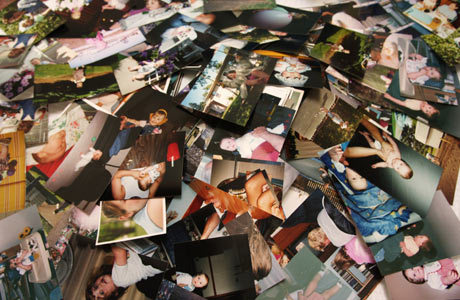 It would truly be overwhelming. Decluttering our photo program is another topic for another time, and I want to focus today on preserving the memories from your best photos. So, where do you start? Here are 3 tips from Rebecca Ludens, Scrapbook Expert:
1) If the paper that you have selected to go with your theme is overpowering or busy, you may want to print your photos in black and white.
2) You may want to print your focal point photo larger than the rest of the photographs to make sure that it is clear where the focal point is on the page. I frequently print my focal point photo as a 4x6 inch print and then print the rest of the photos a 2x3 inch prints (two per 4x6 inch page). You may also consider cropping some of the photos to be smaller in size.
If your photos are only on your phone or on your computer, when will your family and friends get to see and enjoy them? Also, when will you add that all important journaling to go with the photos. Print out some of your favorite pictures and scrapbook them today.
Happy Scrapping!
And if you need some supplies, visit my newly established E-bay store: Create and Scrap. New supplies added daily!
1. Choose Only the Best
Choose only the best. You do not need every photo on your scrapbook pages. Think about looking at this album 10 years from now. Which photos will remind you of the moment or event. Select only clear photos that tell the story or show the emotion. Look for photos that include close-ups, that do not have distracting background images, and that tell the story from a unique angle. You may find that you have just one special photo that you want to highlight on a scrapbook page. | |||
| My First Half-Marathon |
2. Pick a Focal Point Photo
Pick a focal point. Once you have selected the group of photos that you will be using for your scrapbook page layout, select one photo that will be the focal point of the scrapbook page. If you have a clear focal point photo, your scrapbook page will feel anchored. It will have a place for the reader’s eye to rest as she takes in the full story of the layout. |
| Notice the top photo is off center to draw attention |
3. Print Your Selections
Print your selections. Now it is time to print your photos. Consider these two ideas:1) If the paper that you have selected to go with your theme is overpowering or busy, you may want to print your photos in black and white.
2) You may want to print your focal point photo larger than the rest of the photographs to make sure that it is clear where the focal point is on the page. I frequently print my focal point photo as a 4x6 inch print and then print the rest of the photos a 2x3 inch prints (two per 4x6 inch page). You may also consider cropping some of the photos to be smaller in size.
If your photos are only on your phone or on your computer, when will your family and friends get to see and enjoy them? Also, when will you add that all important journaling to go with the photos. Print out some of your favorite pictures and scrapbook them today.
Happy Scrapping!
And if you need some supplies, visit my newly established E-bay store: Create and Scrap. New supplies added daily!
Thursday, December 25, 2008
Merry Christmas
I know we are all busy opening gifts, visiting family & friends and eating, but I wanted to take a moment & wish everyone a very merry Christmas!
I'll be back tomorrow with lists of how to organize those holiday photos and how to start scrapping them, along with ideas on what to do with your holiday cards!
Enjoy your day, everyone!
I'll be back tomorrow with lists of how to organize those holiday photos and how to start scrapping them, along with ideas on what to do with your holiday cards!
Enjoy your day, everyone!
Sunday, September 7, 2008
Baby Album Ideas!
Your little baby - they grow up fast & you are busily clicking the camera, snapping every moment. So now you have a mountain of photos (or lots of files on your computer), so which ones do you include in your album?
Here are some ideas to try & narrow the field a bit:
Baby’s First Bath
As soon as the "belly button" falls off, it's time for the first real bath. In addition to taking pictures of your baby in the cute, little bathtub, be sure to take one of him/her all swaddled in the hooded towel after the bath is over. And in your journaling you can write about how old your baby was and his/her reaction to the bath.
Baby’s First Trip
Whether it's a day trip to Grandma and Grandpa's house, a weekend getaway or even a full blown vacation, baby’s first trip is a significant milestone to preserve. Regardless of where you go on this first trip, your baby will encounter many new new sights, sounds, smells, people, etc. Journal about how your baby reacts to these new and different surroundings.
Baby’s First Solid Food
The first time your baby tries solid food is a fun event to capture in photos. The facial expressions are priceless. Things to journal about include what the food was, how much your baby ate and your baby's reaction. When your baby is older, take some pictures of him/her feeding himself/herself pasta with tomato sauce. A messy tomato sauce face is quite a sight!
Baby’s First Tooth
Although a toothless grin is absolutely adorable, it is exciting to see that first pearly white poking through. Once it’s visible enough to be seen in photos, take some great close-up shots for your scrapbook album. Note in your journaling the date the tooth first poked through and the date the photos were taken.
Baby’s First Step
While it’s often difficult to capture your baby’s very first step on camera, you’ll certainly get lots of photos of those very early steps. Try putting them in sequential order – from letting go of the furniture to taking those wobbling steps to landing on a diapered bottom – to show your baby’s progress across the floor.
Baby’s First Easter
Depending on how old your baby is for his/her first Easter, here are some ideas for what to include in your scrapbook album: dyeing Easter eggs, visiting the Easter Bunny, going on an egg hunt, opening his/her Easter basket, finding eggs hidden by the Easter Bunny, and preparing/eating Easter dinner.
Baby’s First Mother’s Day/Father’s Day
The first Mother's Day/Father's Day with your baby is, of course, very special. And you'll certainly take lots of photos of Mommy/Daddy with Baby. In addition to journaling about how you spent the day, it's interesting to journal about what you were doing and feeling on the previous Mother's Day/Father's Day. Maybe you were pregnant and received gifts from your baby-to-be. Maybe you didn't have any idea that you would be a parent in a year. Either way, it's fun to reminisce about what a difference a year makes.
Baby’s First Halloween
Depending on how old your baby is for his/her first Halloween, you may or may not put them in a costume. If they're in a costume then of course you'll take lots of pictures of them all dressed-up. If they're very young, putting them next to a very large pumpkin makes for an adorable photo. Remember to include pictures of your pumpkin picking trip, too.
Baby’s First Thanksgiving
On our Thanksgiving pages we often journal about what we're thankful for. Of course, as new Moms we're most thankful for our new babies. Journal about the "little things" you're thankful for – how your baby tightly holds your pinky when you feed him/her, the way your baby smells after a bath, the sound of your baby's giggle when you make funny faces, the peaceful feeling of rocking your baby to sleep, etc. – to make these pages extra special.
Baby’s First Christmas
There are so many memories you'll want to capture in your photos - getting the tree, trimming the tree, Christmas Eve, Christmas morning, favorite gifts and more. I've written another article called “Scrapbooking Your Christmas Memories” that has lots of suggestions for things to include in your scrapbook album.
Baby’s First Snow
If you live in a cold weather climate, your baby's first encounter with snow makes a fun page for the album. Even if your baby isn’t old enough to play in the snow, you can bundle him/her up and go outside so he/she can see the snow and feel it on his/her face. Some things to journal about on this page are the date of the snowstorm, your baby's age, what you did outside (e.g., pulled your baby in a sled, built a snowman), and your baby's reaction to the snow.
Other Photos
Undoubtedly, you have lots of baby pictures that aren't part of a specific event, holiday, milestone, etc. It can be hard to come up with ideas for how to categorize them. Here are some page/title ideas to use for your "every day" photos: Month (e.g., March, August Days), seasons (e.g., Spring Time, Winter Days), Sweet Girl/Boy, Play Time, Having Fun, Silly Sisters/Siblings, Peek-a-Boo, Cute as a Button, Busy as a Bee, Laughing and Smiling, Say "Cheese", Mommy's Little Girl/Boy, Daddy's Little Girl/Boy, Apple of Mommy’s/Daddy's Eye, Memorable Moments, Friends and Fun, "Look at Me!", Miles of Smiles, Precious Moments, and Movie Star (photos wearing different pairs of sunglasses). Also, if you have a nickname for your baby, that can make a cute page title.
Baby’s First Birthday
In addition to the standard pictures – singing Happy Birthday, blowing out the candles, eating the cake, opening the gifts, posing with party guests – take a picture of your baby right after he/she wakes up in the morning on his/her birthday and another one right before going to bed that night. That way you can put just these two pictures on a separate page and focus your journaling on how your baby spent his/her first birthday, from waking until bedtime.
The Perfect Ending
If you still have your baby’s hospital hat (you know, the adorable little hats babies wear right after they’re born), put it on your baby’s head and grab your camera. Although it will look pretty funny stretched out over the head of a one-year old, it makes quite a poignant picture. Put just this photo on the last page of your baby’s first year album, and you’ll have lots of room for journaling about the amazing year that has passed since you welcomed your baby into your life.
Here are some ideas to try & narrow the field a bit:
Baby’s First Bath
As soon as the "belly button" falls off, it's time for the first real bath. In addition to taking pictures of your baby in the cute, little bathtub, be sure to take one of him/her all swaddled in the hooded towel after the bath is over. And in your journaling you can write about how old your baby was and his/her reaction to the bath.
Baby’s First Trip
Whether it's a day trip to Grandma and Grandpa's house, a weekend getaway or even a full blown vacation, baby’s first trip is a significant milestone to preserve. Regardless of where you go on this first trip, your baby will encounter many new new sights, sounds, smells, people, etc. Journal about how your baby reacts to these new and different surroundings.
Baby’s First Solid Food
The first time your baby tries solid food is a fun event to capture in photos. The facial expressions are priceless. Things to journal about include what the food was, how much your baby ate and your baby's reaction. When your baby is older, take some pictures of him/her feeding himself/herself pasta with tomato sauce. A messy tomato sauce face is quite a sight!
Baby’s First Tooth
Although a toothless grin is absolutely adorable, it is exciting to see that first pearly white poking through. Once it’s visible enough to be seen in photos, take some great close-up shots for your scrapbook album. Note in your journaling the date the tooth first poked through and the date the photos were taken.
Baby’s First Step
While it’s often difficult to capture your baby’s very first step on camera, you’ll certainly get lots of photos of those very early steps. Try putting them in sequential order – from letting go of the furniture to taking those wobbling steps to landing on a diapered bottom – to show your baby’s progress across the floor.
Baby’s First Easter
Depending on how old your baby is for his/her first Easter, here are some ideas for what to include in your scrapbook album: dyeing Easter eggs, visiting the Easter Bunny, going on an egg hunt, opening his/her Easter basket, finding eggs hidden by the Easter Bunny, and preparing/eating Easter dinner.
Baby’s First Mother’s Day/Father’s Day
The first Mother's Day/Father's Day with your baby is, of course, very special. And you'll certainly take lots of photos of Mommy/Daddy with Baby. In addition to journaling about how you spent the day, it's interesting to journal about what you were doing and feeling on the previous Mother's Day/Father's Day. Maybe you were pregnant and received gifts from your baby-to-be. Maybe you didn't have any idea that you would be a parent in a year. Either way, it's fun to reminisce about what a difference a year makes.
Baby’s First Halloween
Depending on how old your baby is for his/her first Halloween, you may or may not put them in a costume. If they're in a costume then of course you'll take lots of pictures of them all dressed-up. If they're very young, putting them next to a very large pumpkin makes for an adorable photo. Remember to include pictures of your pumpkin picking trip, too.
Baby’s First Thanksgiving
On our Thanksgiving pages we often journal about what we're thankful for. Of course, as new Moms we're most thankful for our new babies. Journal about the "little things" you're thankful for – how your baby tightly holds your pinky when you feed him/her, the way your baby smells after a bath, the sound of your baby's giggle when you make funny faces, the peaceful feeling of rocking your baby to sleep, etc. – to make these pages extra special.
Baby’s First Christmas
There are so many memories you'll want to capture in your photos - getting the tree, trimming the tree, Christmas Eve, Christmas morning, favorite gifts and more. I've written another article called “Scrapbooking Your Christmas Memories” that has lots of suggestions for things to include in your scrapbook album.
Baby’s First Snow
If you live in a cold weather climate, your baby's first encounter with snow makes a fun page for the album. Even if your baby isn’t old enough to play in the snow, you can bundle him/her up and go outside so he/she can see the snow and feel it on his/her face. Some things to journal about on this page are the date of the snowstorm, your baby's age, what you did outside (e.g., pulled your baby in a sled, built a snowman), and your baby's reaction to the snow.
Other Photos
Undoubtedly, you have lots of baby pictures that aren't part of a specific event, holiday, milestone, etc. It can be hard to come up with ideas for how to categorize them. Here are some page/title ideas to use for your "every day" photos: Month (e.g., March, August Days), seasons (e.g., Spring Time, Winter Days), Sweet Girl/Boy, Play Time, Having Fun, Silly Sisters/Siblings, Peek-a-Boo, Cute as a Button, Busy as a Bee, Laughing and Smiling, Say "Cheese", Mommy's Little Girl/Boy, Daddy's Little Girl/Boy, Apple of Mommy’s/Daddy's Eye, Memorable Moments, Friends and Fun, "Look at Me!", Miles of Smiles, Precious Moments, and Movie Star (photos wearing different pairs of sunglasses). Also, if you have a nickname for your baby, that can make a cute page title.
Baby’s First Birthday
In addition to the standard pictures – singing Happy Birthday, blowing out the candles, eating the cake, opening the gifts, posing with party guests – take a picture of your baby right after he/she wakes up in the morning on his/her birthday and another one right before going to bed that night. That way you can put just these two pictures on a separate page and focus your journaling on how your baby spent his/her first birthday, from waking until bedtime.
The Perfect Ending
If you still have your baby’s hospital hat (you know, the adorable little hats babies wear right after they’re born), put it on your baby’s head and grab your camera. Although it will look pretty funny stretched out over the head of a one-year old, it makes quite a poignant picture. Put just this photo on the last page of your baby’s first year album, and you’ll have lots of room for journaling about the amazing year that has passed since you welcomed your baby into your life.
Subscribe to:
Posts (Atom)